

News
Exclusive analysis article with latest market updates, and in-time news feeds.
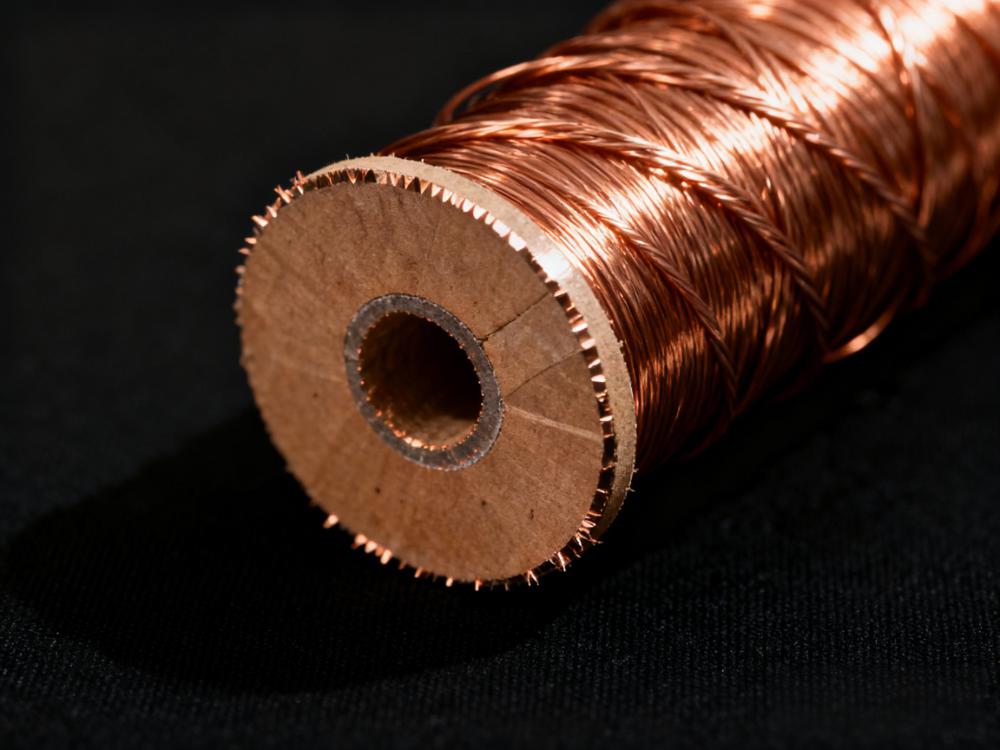
Middle East Escalation: Copper Prices Under Pressure Amid Rising Supply Risks in Africa
Tensions in the Middle East have escalated again recently, as the conflict between Israel and Iran continues to intensify, drawing renewed global attention to energy transportation security in the Gulf region.Given the high level of uncertainty surrounding the development of the situation, market risks are clearly skewed to the upside. This article provides a brief analysis of how the current conflict may affect the copper market going forward.
Mar 10, 2026 10:00
Gold set for second weekly loss on reduced rate cut bets, higher dollar, yields
March 13 (Reuters) - Gold was on track for a second straight weekly loss, even as it edged higher on Friday, as surging oil prices dampened rate cut bets and caused investors to cover margin calls, while a rising dollar and U.S. yields also pressured prices.
Common.Time.hoursAgo
Amidst Middle East Conflicts: What is the Path Forward for China's Energy Storage Exports?
Recent Middle East conflicts have disrupted the region's booming energy storage market, a major destination for Chinese exports. To assess the real impact on Chinese supply chains and project deliveries, we must analyze baseline demand amidst these geopolitical uncertainties.
Mar 9, 2026 17:58
Latest News
PM Modi Dedicates India's First Automated Dry-Bulk Cargo Terminal to Nation
Common.Time.minsAgo
Korea Zinc Explores Metal Recovery from Data-Center Waste
Common.Time.minsAgo
Greenway Metal Expands Electronics Scrap Recycling
Common.Time.minsAgo
Nth Cycle Signs $1B Recycling Metals Deal with Trafigura
U.S. recycling technology firm Nth Cycle has signed a 10-year metal supply agreement with commodity trader Trafigura worth about $1.1 billion. The partnership will recover metals such as copper and nickel from scrap and industrial waste using electrochemical refining technology. Analysts say such collaborations could significantly expand secondary copper supply.
Common.Time.minsAgo
Short-Term Bullish Momentum Weakened, Outside-China Supply Tightens Underpinned the Aluminum Market [SMM Aluminum Morning Meeting Summary]
[Short-Term Bullish Momentum Weakened, While Tight Supply Outside China Underpinned the Aluminum Market] Against the backdrop of continued tightening liquidity on the LME, LME aluminum still had upside momentum, with strong support from prices outside China, and the backwardation structure was likely to persist in the short term. China remained in a phase of high inventory and weak spot fundamentals, with upward momentum clearly weaker than that outside China. Amid divergent domestic and external drivers, the SHFE/LME price ratio was expected to continue weakening, and aluminum prices were expected to continue fluctuating at highs in the short term.
Common.Time.minsAgo
Futures Staged a V-Shaped Rebound, ADC12 to Fluctuate at Highs in the Short Term [SMM Cast Aluminum Alloy Morning Comment]
[SMM Cast Aluminum Alloy Morning Comment: V-Shaped Rebound in Futures, ADC12 to Fluctuate at Highs in the Short Term] Overnight, aluminum alloy 2604 in the night session bottomed out and showed a rangebound fluctuating trend: after the opening, it quickly fell to around 23,570 yuan/mt, then fluctuated upward, with a trading range of 23,570-23,715 yuan/mt, and closed at 23,710 yuan/mt at the end of the session, down 0.50% from the previous day's closing price. Intraday, it first fell sharply and then staged a V-shaped rebound, before entering sideways consolidation, with the tug-of-war between longs and shorts remaining balanced. Trading volume shrank, open interest edged up slightly, and market sentiment remained cautious.
Common.Time.minsAgo
Peru's Trapiche Copper Mine EIA Approved, Overnight LME Copper and SHFE Copper Both Rebounded [SMM Copper Morning Meeting Minutes]
SMM Morning Meeting Summary: Overnight, LME copper opened at $12,751/mt and dipped to $12,743/mt at the start of the session. Thereafter, the center of copper prices gradually moved higher and, near the close, touched a high of $12,940/mt, before finally closing at $12,918.5/mt, up 1.44. Trading volume reached 19,700 lots, and open interest stood at 302,000 lots, down 5,166 lots from the previous trading day, mainly due to bears reducing positions. Overnight, the most-traded SHFE copper 2604 contract opened at 100,020 yuan/mt and hit a low of 99,820 yuan/mt at the start of the session. It then fluctuated upward to 100,420 yuan/mt, followed by wide swings, and finally closed at 100,190 yuan/mt, up 0.58. Trading volume reached 274,000 lots, and open interest stood at 190,000 lots, down 3,315 lots from the previous trading day, mainly due to bears reducing positions.
Common.Time.minsAgo
Secondary Lead Prices Inverted Against Primary Lead Prices, Lead Market Fluctuated Amid a Tug-of-War Between Sellers and Buyers [SMM Lead Morning Meeting Minutes]
Common.Time.minsAgo
LME lead fluctuated upward to close higher, while SHFE lead moved downwards after a higher opening and remained in the doldrums [SMM Lead Morning Brief]
Common.Time.minsAgo
China Inventory Continued to Increase, SHFE Zinc Fluctuated Downward [SMM Zinc Morning Comment]
[SMM Zinc Morning Comment] Overnight, the most-traded SHFE zinc 2604 contract opened at 23,930 yuan/mt. In early trading, SHFE zinc briefly rose to a high of 23,970 yuan/mt, then bulls reduced open interest, dragging the price center lower and leaving it in the doldrums. It touched a low of 23,820 yuan/mt during the session and finally closed down at 23,880 yuan/mt, down 25 yuan/mt, or 0.1. Trading volume fell to 29,661 lots, while open interest decreased by 531 lots to 76,786 lots.
Common.Time.minsAgo
![The Most-Traded SHFE Tin Contract Hovered at Highs After Opening Slightly Higher in the Night Session, with Relatively Strong Purchase Willingness Among Downstream Enterprises [SMM Tin Morning Brief]](https://imgqn.smm.cn/usercenter/SkvFp20251217171752.jpg)
The Most-Traded SHFE Tin Contract Hovered at Highs After Opening Slightly Higher in the Night Session, with Relatively Strong Purchase Willingness Among Downstream Enterprises [SMM Tin Morning Brief]
Common.Time.minsAgo
![Geopolitical Turmoil Resurfaces, LME Zinc Comes Under Pressure [SMM Morning Meeting Summary]](https://imgqn.smm.cn/usercenter/nGzXc20251217171754.jpg)
Geopolitical Turmoil Resurfaces, LME Zinc Comes Under Pressure [SMM Morning Meeting Summary]
Common.Time.minsAgo

Q1 2026: China's Spot Silver Ingot Market Shifts from Frenzy to Rationality Amid Cooling Investment and Imports Surge
Common.Time.hoursAgo
On 27th Jan, Kim Long Motor and BYD entered into strategic partnership, opening BYD’s first EV battery plant in Vietnam
Under the agreement, China’s BYD Battery, a global leader in green vehicles, will transferring technical expertise and transfer battery technology for the project while Vietnam’s Kim Long Motor will in charge of financing and developing energy battery manufacturing plant.
The project is intended to help Vietnamese companies progressively develop their own battery production capabilities. After completion, the BYD battery facility is projected to enable Kim Long Motor to raise its localization rate to more than 80% by Q2 2026.
Common.Time.hoursAgo
Tender Notice for Projects Including Safe and Energy-Efficient Copper Conductor Rails
Common.Time.hoursAgo
[SMM Steel] Punjab emerges as key investment hub for India's steel sector
[SMM Steel] During the Progressive Punjab Investors’ Summit, major steel players announced massive CAPEX plans fueled by new ease-of-business policies. ArcelorMittal will invest over INR 60,000 crore, while Tata Steel and JSW Group committed INR 3,200 crore and INR 3,000 crore respectively for new plants and capacity expansions. These investments mark Punjab’s strategic transition from an agricultural hub to a major manufacturing and steel production base.
Common.Time.hoursAgo
[SMM Steel] India’s NMDC Limited achieves record iron ore output in FY 2025-26
[SMM Steel] State-run miner NMDC Limited will exceed 50 million mt of iron ore production in FY 2025-26, the first company in India to reach this annual milestone. This surpasses the previous record of 45.2 million mt (FY24), supporting India's strategic goal of expanding steelmaking capacity to 300 million mt by 2030.
Common.Time.hoursAgo
Lynas and JARE Sign Long-Term Rare Earth Supply Deal with Floor Price and Profit-Sharing Mechanisms【SMM Analysis】
On March 10, 2026, Lynas and Japan’s JARE signed a long-term deal featuring PrNd floor prices, profit-sharing, and heavy rare earth priority. Analyzing 2025 production data, this report evaluates the partnership’s commercial terms, operational progress, and downstream demand security.
Common.Time.hoursAgo
[SMM Daily HRC Trading] Spot Trading Fluctuated Rangebound
[SMM Daily HRC Trading] On March 16, the total daily HRC trading volume of sample enterprises in four SMM cities (Shanghai, Lecong, Tianjin, and Ningbo) was 15,390 mt, down 520 mt day on day, or 3.3%, up 19.95% YoY on a calendar basis and up 20.61% YoY on a lunar-calendar basis.
Common.Time.hoursAgo
The Most-Traded BC Copper Contract Closed Down 1.16%, Inflation Concerns Suppressed Expectations for Interest Rate Cuts [SMM BC Copper Commentary]
Common.Time.hoursAgo
![[SMM Events] 2026 GRMI: 200+ Executives & Companies Registered! Join us in Tokyo this June for Recycling Industry](https://imgqn.smm.cn/production/admin/votes/imagesECPmG20260316150318.jpeg)
[SMM Events] 2026 GRMI: 200+ Executives & Companies Registered! Join us in Tokyo this June for Recycling Industry
The 2026 SMM (3rd) Global Renewable Metal Industry Chain Summit & Battery Recycling Forum will be held in Tokyo, Japan, from May 11–12, 2026. The summit aims to bring together leading global enterprises, research institutions, industry experts, and policymakers in the fields of renewable metals and battery recycling.
Common.Time.hoursAgo
![[SMM Analysis] ITC Rejects Tariffs on Chinese Graphite Anodes, Final Duties Not Imposed](https://imgqn.smm.cn/usercenter/lzgUR20251217171731.jpg)
[SMM Analysis] ITC Rejects Tariffs on Chinese Graphite Anodes, Final Duties Not Imposed
Mar 13, 2026 19:55
![[SMM Analysis] Why Is India’s Stainless Steel Industry Calling for Both Lower Costs and Stronger Trade Barriers?](https://imgqn.smm.cn/production/admin/votes/imageskXuFi20260313172318.jpeg)
[SMM Analysis] Why Is India’s Stainless Steel Industry Calling for Both Lower Costs and Stronger Trade Barriers?
Mar 13, 2026 17:19
Key Implications for Vietnam's New clauses in Mining and Smelting Laws effective since January 1, 2026
Mar 12, 2026 16:32
Middle East Escalation: Copper Prices Under Pressure Amid Rising Supply Risks in Africa
Mar 10, 2026 10:00

Gold set for second weekly loss on reduced rate cut bets, higher dollar, yields
Common.Time.hoursAgo
Amidst Middle East Conflicts: What is the Path Forward for China's Energy Storage Exports?
Mar 9, 2026 17:58
Latest News
PM Modi Dedicates India's First Automated Dry-Bulk Cargo Terminal to Nation
Common.Time.minsAgo
Korea Zinc Explores Metal Recovery from Data-Center Waste
Common.Time.minsAgo
Greenway Metal Expands Electronics Scrap Recycling
Common.Time.minsAgo
Nth Cycle Signs $1B Recycling Metals Deal with Trafigura
Common.Time.minsAgo
Short-Term Bullish Momentum Weakened, Outside-China Supply Tightens Underpinned the Aluminum Market [SMM Aluminum Morning Meeting Summary]
Common.Time.minsAgo
Futures Staged a V-Shaped Rebound, ADC12 to Fluctuate at Highs in the Short Term [SMM Cast Aluminum Alloy Morning Comment]
Common.Time.minsAgo
Peru's Trapiche Copper Mine EIA Approved, Overnight LME Copper and SHFE Copper Both Rebounded [SMM Copper Morning Meeting Minutes]
Common.Time.minsAgo
Secondary Lead Prices Inverted Against Primary Lead Prices, Lead Market Fluctuated Amid a Tug-of-War Between Sellers and Buyers [SMM Lead Morning Meeting Minutes]
Common.Time.minsAgo
LME lead fluctuated upward to close higher, while SHFE lead moved downwards after a higher opening and remained in the doldrums [SMM Lead Morning Brief]
Common.Time.minsAgo
China Inventory Continued to Increase, SHFE Zinc Fluctuated Downward [SMM Zinc Morning Comment]
Common.Time.minsAgo
The Most-Traded SHFE Tin Contract Hovered at Highs After Opening Slightly Higher in the Night Session, with Relatively Strong Purchase Willingness Among Downstream Enterprises [SMM Tin Morning Brief]
Common.Time.minsAgo
Geopolitical Turmoil Resurfaces, LME Zinc Comes Under Pressure [SMM Morning Meeting Summary]
Common.Time.minsAgo
Q1 2026: China's Spot Silver Ingot Market Shifts from Frenzy to Rationality Amid Cooling Investment and Imports Surge
Common.Time.hoursAgo
On 27th Jan, Kim Long Motor and BYD entered into strategic partnership, opening BYD’s first EV battery plant in Vietnam
Common.Time.hoursAgo
Tender Notice for Projects Including Safe and Energy-Efficient Copper Conductor Rails
Common.Time.hoursAgo
[SMM Steel] Punjab emerges as key investment hub for India's steel sector
Common.Time.hoursAgo
[SMM Steel] India’s NMDC Limited achieves record iron ore output in FY 2025-26
Common.Time.hoursAgo
Lynas and JARE Sign Long-Term Rare Earth Supply Deal with Floor Price and Profit-Sharing Mechanisms【SMM Analysis】
Common.Time.hoursAgo
[SMM Daily HRC Trading] Spot Trading Fluctuated Rangebound
Common.Time.hoursAgo
The Most-Traded BC Copper Contract Closed Down 1.16%, Inflation Concerns Suppressed Expectations for Interest Rate Cuts [SMM BC Copper Commentary]
Common.Time.hoursAgo